
 (A journey through Costa Rica’s seven provinces) Written by our Travel Specialist, Nicola Parapella
Vendors move between their stalls, calling out to you, each trying to capture your attention. At first, you might find yourself standing still, unsure where to begin.
Amid the morning bustle, vibrant, colourful fruits catch your eye. Some are instantly recognisable: bananas, pineapples, papayas, avocados. But that round, purple fruit in the middle—cut in half and resting among the others—feels unfamiliar. White at its centre, with soft purple edges, its seeds are perfectly aligned, with delicate lines around them forming a star-like pattern.
“Caimito,” the vendor explains. You glance at the handwritten sign: 2,000 colones per kilo. He cuts the fruit in half, hands it to you, and invites you to taste it. Juicy pulp, an entirely new texture—slightly sticky, sweet, and with a flavour you’ve never quite experienced before. The vendor smiles. You place the caimito in your bag and move on. A warm breeze brushes your face.
Spending a weekend morning at a local farmers’ market—known in Costa Rica as a Feria del Agricultor—is an experience in itself. But fruits and vegetables are only a small part of what this tropical country, nestled between the Caribbean and the Pacific, has to offer from a culinary perspective.
San José: Where it all begins
We begin in the capital, San José. A visit to the Central Market is highly recommended. Here, you’ll discover a wide variety of local products and traditional dishes. Alongside fruits and vegetables, you’ll find stalls selling meat, fish, cheese, honey, spices, flowers, souvenirs, handicrafts and everyday goods.
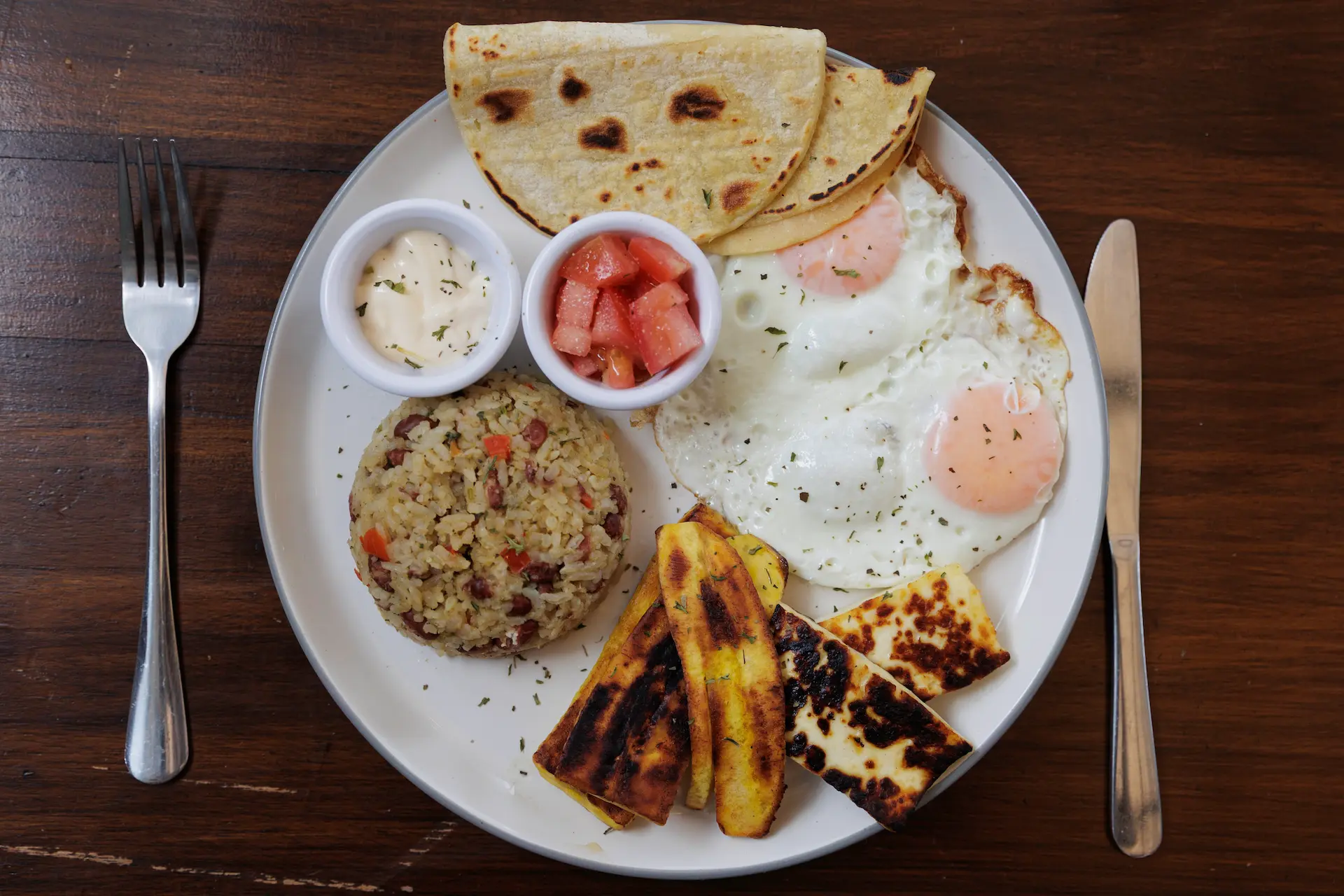
While here, you simply must try a casado. The name literally means “married,” referring to the combination of rice, beans, salad, fried plantains, sometimes a fried egg, and usually fish or meat. The dish dates back to the mid-20th century, when workers in local sodas (small eateries) asked for a hearty meal to keep them going. Few dishes represent Costa Rican cuisine as well as this national classic, typically served at lunchtime.
If you prefer a more traditional restaurant setting, La Criollita, near Parque España, is a great option.
The Caribbean: Bold flavours and coconut aromas
From the capital, we head to the Caribbean coast—home to one of the country’s most distinctive culinary identities. Known for its bold, Afro-Caribbean flavours, dishes here often carry a gentle heat, enriched with the unmistakable taste of coconut.
Cycle along the beaches between Puerto Viejo and Manzanillo, pause along the way, lean your bike against a palm tree, and try a rondón—a rich, slightly spicy stew made with fresh fish and root vegetables like sweet potato and cassava, cooked in coconut milk.
Or enjoy an unforgettable rice and beans, Caribbean-style, at Restaurante Tamara in the heart of Puerto Viejo: rice and beans cooked in coconut milk with spices—pure Caribbean flavour. We also recommend Soda Riquísimo and Selvin Restaurant.
Throughout Puerto Viejo and nearby beaches, you’ll find coconut oil sold on nearly every corner. Whether for cooking or as a natural skin and hair treatment after a sunny day by the turquoise sea, it’s a local essential.
Cartago: Fresh air and fertile lands
From the coast, we continue inland to Cartago, a charming and rural province. Wide fields, fertile soil and small towns shape the landscape, where the cultivation of potatoes and vegetables plays a key role.
Due to its higher altitude, the climate here is refreshingly cool—bring a light jacket, as temperatures can be noticeably lower than on the coast. Towering above the region are the impressive Turrialba and Irazú volcanoes, giving the area its distinctive character.
If you visit in September, don’t miss Tucurrique, considered the pejibaye capital of Costa Rica. During the last two weeks of the month, the traditional pejibaye fair takes place. Around 400,000 kilos of this fruit are produced annually by local farmers.
Pejibaye, harvested from the peach palm, is boiled for several hours until soft. Once peeled and deseeded, it is best enjoyed simply—with a touch of mayonnaise. At the fair, you’ll find it in soups, tamales, breads, pastries, sweets and jams, all accompanied by music, dancing and colourful celebrations.
Puntarenas: From the sea to something sweet
After so many hearty dishes, it’s time for dessert—and ice cream is always a good idea.
We head to Puntarenas, stretching along Costa Rica’s Pacific coast. Known for its beaches, coastal towns and fishing traditions, this province is deeply connected to the sea.
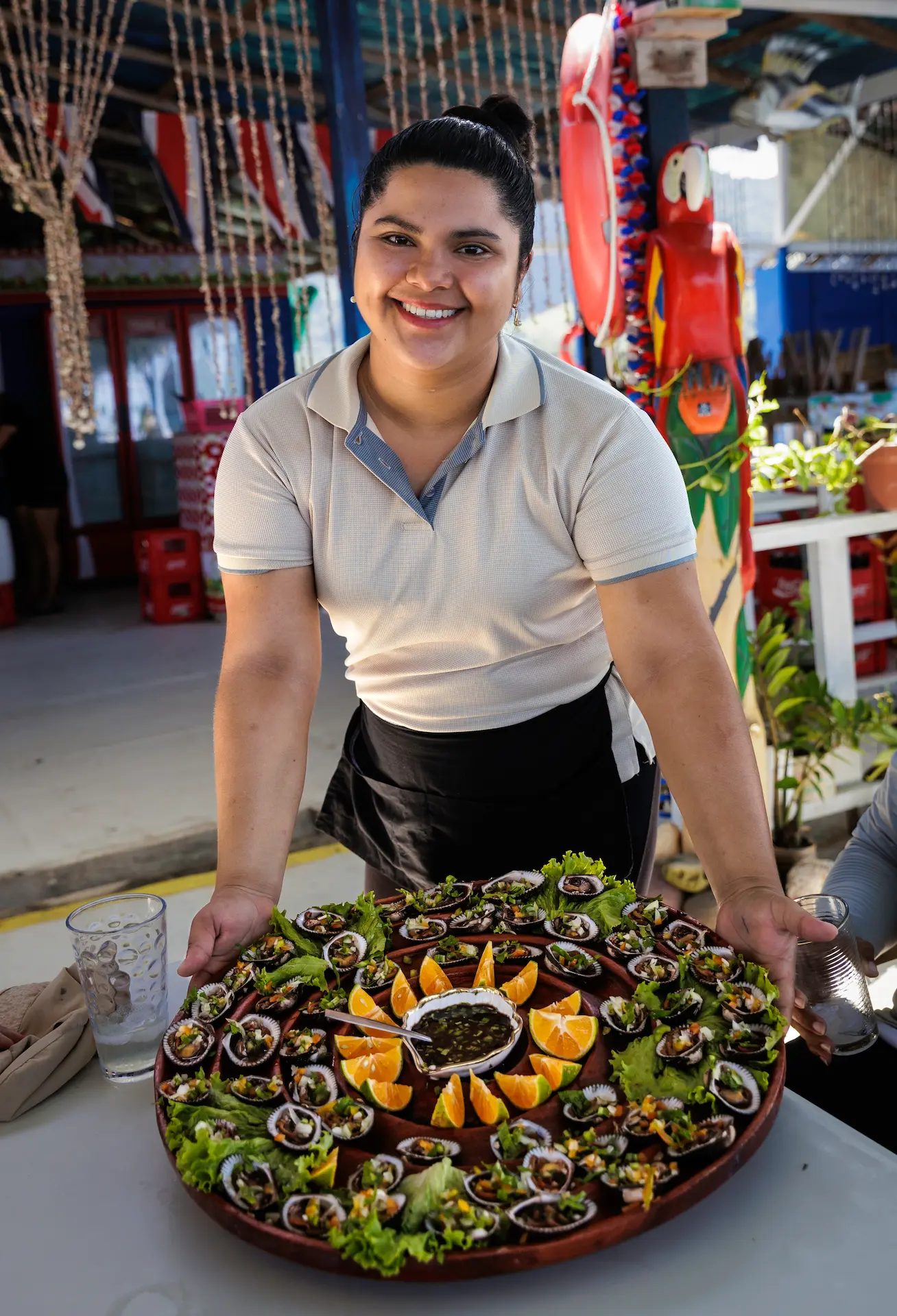
Fresh fish and seafood dominate the cuisine. Ceviche—made with raw fish or seafood marinated in lime juice—is a local favourite. The acidity gently “cooks” the fish, giving it a firm texture and bright flavour, enhanced with onion, chilli and coriander.
But let’s get back to dessert.
Walk along the Paseo de los Turistas and you’ll spot vendors shaving fresh ice from small carts. Near the lighthouse, look out for a local favourite: the famous Churchill.
This refreshing Costa Rican treat is made with shaved ice, condensed milk, powdered milk, syrup, and sometimes fruit or biscuits. Sit by the waterfront, watch the ferries come and go, and let your mind wander.
Guanacaste: Sun, tradition and flavour
As the sun sets, we continue to Guanacaste—known for its stunning beaches, endless sunshine, folklore and cowboy traditions.
Stay a few days and explore its coastline—each beach more beautiful than the last. It’s also the perfect place to dive into traditional cuisine.
Try gallina achiotada, chicken marinated in a rich achiote sauce and often cooked over a wood fire. Served with rice, potatoes, corn tortillas and sometimes banana leaves, it’s full of colour and flavour.
Another favourite is arroz guacho, a creamy, comforting rice dish. For dessert, enjoy arroz con leche or a glass of chicheme, a sweet corn-based drink.
Corn plays a central role in Guanacaste’s cuisine, reflecting strong indigenous and rural traditions that remain deeply rooted in the region.
If you’re in Liberia, the provincial capital, La Choza del Laurel is highly recommended.
Heredia & Alajuela: Coffee and tradition
Finally, we visit Heredia and Alajuela.
In Heredia, lush coffee plantations define the landscape. Before diving into coffee tasting, enjoy an olla de carne—a hearty beef stew with corn, cassava, plantains and vegetables. Some of the most traditional versions can be found in towns like Barva and San Rafael.
Heredia is also rich in culture. In Barva, colourful mask festivals are still celebrated, and the town retains its colonial charm. During Easter, traditions come alive, and empanadas de chiverre—sweet pastries made from local squash—are found everywhere.
To end our culinary journey, we head to Alajuela for one final experience: coffee.
Rolling hills and small towns like Sarchí and Naranjo invite you to pause and enjoy a cup of Costa Rican coffee. If visiting between October and March, you may even witness the harvest season.
A lasting taste of Costa Rica
As your journey comes to an end and you board your flight home, these flavours will stay with you.
Perhaps one day, you’ll spot a Costa Rican pineapple in your local supermarket—and suddenly, you’ll be transported back. To the markets, the coastlines, the mountains… and to a country rich in flavours and aromas that leave a lasting imprint on the palate.