
Written by our Travel Specialist, Diego Quesada
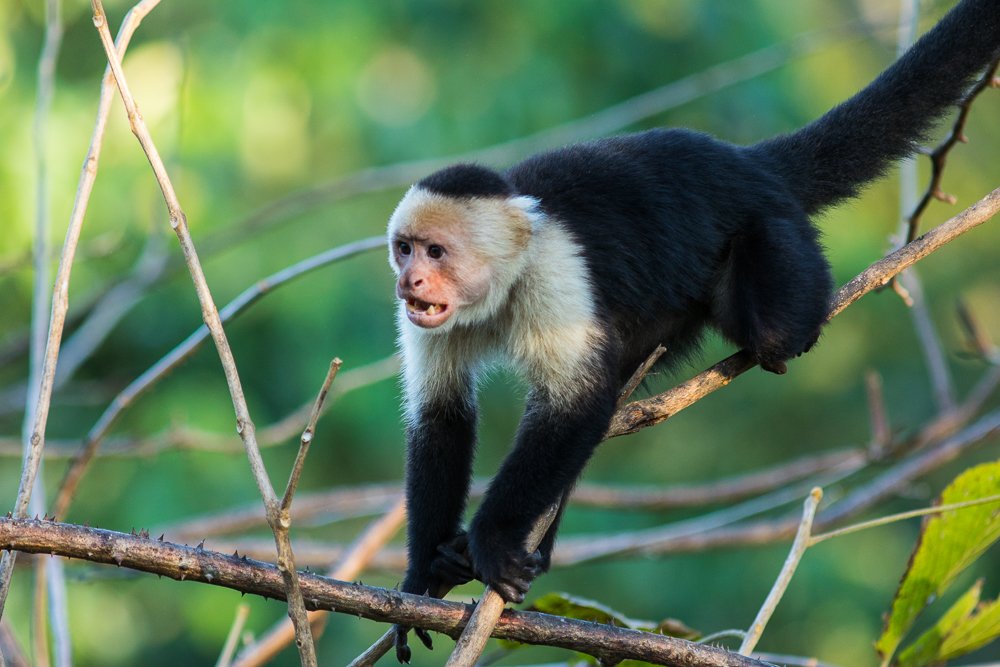
Costa Rica is one of the most biodiverse countries in the world, despite its relatively small size. Wildlife plays a fundamental role in maintaining healthy ecosystems—supporting pollination, water and air purification, soil stability, and climate regulation.
For many travellers, experiencing wildlife in its natural habitat is one of the main reasons to visit Costa Rica. Across the country, protected forests, coastlines and reserves offer the opportunity to observe animals safely and responsibly, both for visitors and for the ecosystems themselves.
 Wildlife Protection in Costa Rica
Costa Rica has a strong legal framework for wildlife protection. The Wildlife Conservation Law (No. 7317), along with subsequent reforms and the Animal Welfare Law (No. 9458), regulates the protection and sustainable use of flora and fauna.
These laws strictly prohibit:
- Keeping wild animals as pets
- Sport hunting
- Unauthorised wildlife trade
This commitment to conservation is one of the key reasons why Costa Rica remains a global leader in sustainable tourism.
Where to See Sloths and Monkeys in Costa Rica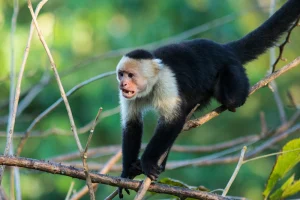
Spotting iconic species such as sloths and monkeys is often easier than expected—simply walking through protected forests can be enough.
However, a guided walk is highly recommended. Local guides are trained to detect subtle movements and sounds, making wildlife sightings far more likely. They also provide valuable insight into animal behaviour and ecosystems.
Self-guided walks can still offer sightings of species such as tree frogs or anteaters, though encounters may be less frequent, as wildlife naturally avoids human interaction.
Some of the best locations to see sloths and monkeys include:
- Manuel Antonio National Park
- The hanging bridges in La Fortuna
- Tortuguero National Park
- Puerto Viejo and Cahuita (Caribbean coast)
- The Osa Peninsula
For more specialised experiences, destinations such as Monteverde, Corcovado, or the Sloth Sanctuary near Cahuita are best explored with certified guides.
Sea Turtle Watching in Costa Rica
Costa Rica is a global reference point for sea turtle conservation, hosting 5 of the world’s 7 species. These turtles nest along both the Pacific and Caribbean coasts at different times of the year.
One of the most remarkable natural events is the arribada, when thousands of olive ridley turtles come ashore simultaneously to nest—particularly in Ostional and Nancite, mainly between August and December.
Main Sea Turtle Species
- Leatherback Turtle (Dermochelys coriacea)
The largest species, nesting on the Caribbean coast (Pacuare, Tortuguero, Gandoca) from March to June, and on the northern Pacific from October to December. - Olive Ridley Turtle (Lepidochelys olivacea)
Known for mass nesting (arribadas) on the Pacific coast, especially during the rainy season. - Green Turtle (Chelonia mydas)
Primarily nests in Tortuguero (Caribbean coast) between July and October. - Hawksbill Turtle (Eretmochelys imbricata)
Critically endangered, typically found in coral reef ecosystems year-round. - Loggerhead Turtle (Caretta caretta)
Occasional sightings along the Pacific coast.
Best Places and Seasons for Turtle Watching
- Ostional (Pacific Coast): Olive ridley arribadas, mainly August–December
- Tortuguero (Caribbean): Green turtle nesting, July–October
- Pacuare & Gandoca (Caribbean): Leatherback turtles, March–June
Responsible Wildlife Viewing
Observing wildlife in Costa Rica comes with responsibility.
For turtle nesting tours and other wildlife experiences:
- Always go with certified local guides
- Avoid white lights or flash photography
- Keep a respectful distance
- Follow all local regulations
A Destination Defined by Biodiversity
Thanks to its extraordinary biodiversity, it is possible to observe multiple species in a single day within a relatively small area. This diversity often encourages travellers to stay longer—typically 2 to 3 weeks—to explore different ecosystems, from rainforest and cloud forest to coastal and marine environments.
At the same time, it is important to recognise that these experiences are only possible thanks to ongoing conservation efforts. Without them, many of these ecosystems—and the wildlife they support—would not exist in their current form.
A simple but important question to ask when planning your trip is: How can I experience wildlife without harming it?
The answer lies in being informed, respecting regulations, and travelling consciously.